How Ford’s Model T Revolutionized Production
The Ford Model T stands as a landmark in industrial history, not merely for the vehicle itself but for the revolutionary production methods it introduced. The early 20th century saw the automobile as a luxury item, handcrafted and prohibitively expensive for the average citizen. The transformation initiated by Henry Ford’s approach to manufacturing not only redefined the automotive industry but also set a precedent for mass production across numerous sectors. This article explores the intricacies of the assembly line, its effects on automotive manufacturing, and the broader implications for society.
Understanding the context of pre-assembly line production is crucial. Automobiles were built by skilled craftsmen who assembled each car individually, a time-consuming and costly process. The introduction of the moving assembly line at Ford’s Highland Park plant in 1913 marked a departure from these methods, emphasizing efficiency and standardization. This shift did not guarantee immediate success but rather represented a strategic rethinking of how complex products could be manufactured at scale. By breaking down the production process into smaller, repetitive tasks, Ford aimed to reduce the time and cost associated with building a car, ultimately making it more accessible to a wider population.
The following sections delve into the key components of this revolution: the principles of the assembly line, its implementation, the economic and social ramifications, and its enduring legacy in modern manufacturing.
The Principles of the Assembly Line
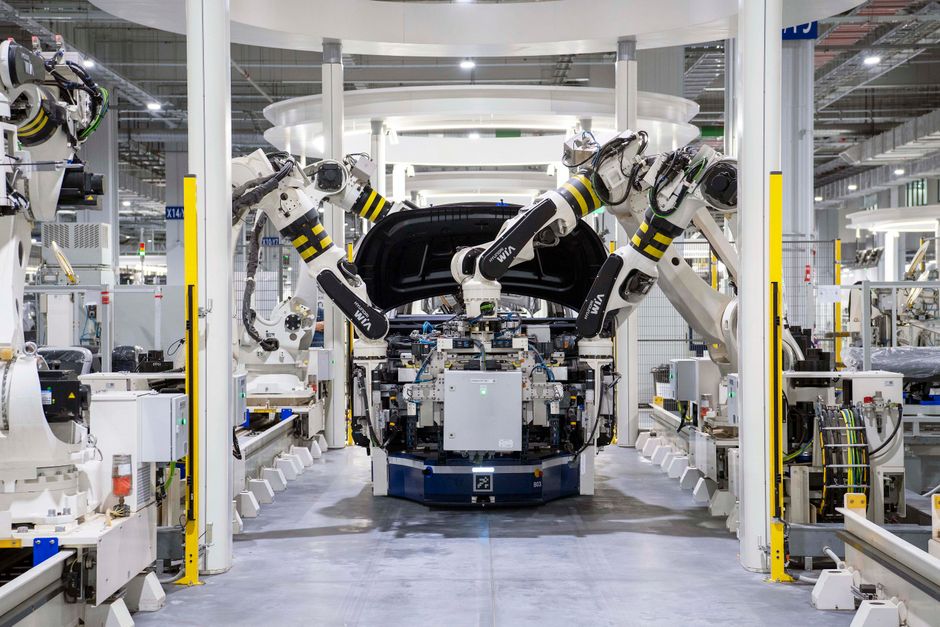
The core idea behind the assembly line is the division of labor, a concept famously articulated by Adam Smith but applied on an unprecedented scale by Ford. Instead of skilled workers performing multiple tasks, each worker became responsible for a single, specialized operation. This specialization allowed for increased speed and proficiency, as workers repeated the same motions repeatedly, reducing the time to complete each task. The moving line itself regulated the pace, ensuring a continuous flow of work and minimizing idle time. This method did not merely improve efficiency; it fundamentally altered the relationship between worker and machine.
The implementation of the moving line was not a singular innovation but a series of incremental changes. Ford and his team experimented with different conveyor systems, workstations, and part deliveries to optimize the flow. They introduced gravity slides and conveyor belts to bring components to the workers, eliminating the need for workers to move around the factory. This focus on material handling was as crucial as the assembly process itself. By standardizing parts and processes, Ford ensured that each Model T was identical, which not only simplified assembly but also facilitated maintenance and repair for owners.
The principles of the assembly line extended beyond mere mechanics; they represented a philosophy of efficiency and predictability. The system was designed to minimize wasted effort, both human and material. This approach required meticulous planning and coordination, as any bottleneck could disrupt the entire line. The factory layout was optimized for a logical sequence of operations, with parts delivered precisely when needed. This just-in-time methodology, though not yet named, was a precursor to modern lean manufacturing techniques. However, it is essential to note that the assembly line was not without its drawbacks, particularly concerning worker satisfaction and health, which will be addressed later.
Implementation and Its Immediate Effects
The moving assembly line was first implemented for the Model T in 1913, and its effects were immediate and measurable. The time required to assemble a chassis dropped from over 12 hours to just 93 minutes, a reduction that astounded industry observers. This dramatic increase in productivity allowed Ford to lower the price of the Model T from $850 in 1908 to less than $300 by the mid-1920s, making car ownership attainable for millions of middle-class Americans and Europeans. This price reduction was not the result of a single breakthrough but a continuous refinement of the process, with each adjustment shaving off seconds from the assembly time.
The impact extended beyond cost; it also transformed the workforce and working conditions. The repetitive nature of assembly line work was monotonous and physically demanding, leading to high employee turnover. In response, Ford introduced the famous $5 per day wage in 1914, doubling the standard pay and reducing turnover significantly. This wage increase was not an act of charity but a business decision to retain skilled workers and maintain the line’s efficiency. The higher wage also enabled workers to afford the very cars they produced, creating a new market for automobiles among the working class.
However, the assembly line also had negative consequences. The monotony of the work led to dissatisfaction and alienation among workers, a phenomenon later studied by sociologists and psychologists. Ford’s methods were criticized for treating workers as mere extensions of machinery, leading to conflicts with labor unions. Despite these issues, the assembly line model was quickly adopted by other industries, from consumer goods to electronics, as its benefits in cost and speed were undeniable. The immediate effects of the assembly line were thus a mix of economic gains and social challenges, setting the stage for future labor reforms.
Economic and Social Ramifications
The economic ramifications of the Model T’s production were profound, not only for Ford Motor Company but for the entire automotive sector and the broader economy. By drastically reducing production costs, Ford created a mass market for automobiles, which in turn stimulated demand for related industries such as petroleum, rubber, and road construction. The increased availability of cars transformed transportation and commerce, facilitating the growth of suburbs and the development of tourism. The multiplier effect of the automotive industry was enormous, contributing to economic growth and job creation on a global scale.
Socially, the Model T democratized mobility, giving individuals the freedom to travel independently. This had cultural implications, shaping American identity and influencing social norms. The car became a symbol of freedom and progress, and its accessibility meant that not only the wealthy could enjoy its benefits. In regions like the United Kingdom, the introduction of affordable cars similarly impacted society, though at a slightly later pace due to differences in infrastructure and income levels. The assembly line also influenced thinking about efficiency and standardization in other areas, such as food processing and home appliances, further reshaping everyday life.
But these changes were not universally positive. The proliferation of cars contributed to urban congestion, traffic accidents, and environmental pollution, issues that persist today. The shift from rail to road transportation altered landscapes and settlement patterns, sometimes detrimentally. The assembly line’s emphasis on uniformity also had cultural consequences, potentially stifling individuality and craftsmanship. Nevertheless, the economic and social transformations initiated by the Model T are undeniable, and they continue to influence contemporary discussions about industrialization and its aftermath.
Legacy and Lessons for Modern Manufacturing
The legacy of Ford’s Model T and its assembly line extends far beyond the early 20th century. The principles of mass production, standardized parts, and continuous flow are foundational to modern manufacturing practices. Techniques such as lean manufacturing, Six Sigma, and automation owe a debt to Ford’s pioneering work. The assembly line demonstrated the power of breaking down complex processes into manageable components, a concept now applied to everything from software development to healthcare. The Model T’s success also highlighted the importance of economies of scale and the potential for cost reductions to widen market access.
However, the lessons from Ford’s approach are not solely about efficiency. The negative aspects, such as worker alienation and repetitive strain injuries, have prompted modern industries to prioritize ergonomics and job satisfaction. The assembly line’s challenges in balancing productivity with human well-being are still relevant, as seen in debates over automation and artificial intelligence. Modern manufacturers strive to incorporate flexibility and worker input into their systems, learning from the rigidity of early assembly lines. The social contract between employers and employees, highlighted by Ford’s $5 day, continues to evolve as companies like Toyota and others refine production philosophies.
Moreover, the environmental and social costs of mass production and consumption are now more apparent than ever. The automotive industry faces pressure to address sustainability, leading to innovations in electric vehicles and green manufacturing. The Model T’s legacy is thus a double-edged sword: it brought unprecedented prosperity and mobility, but also challenges that modern society must confront. In examining the Model T’s revolution, we gain insights into the interplay between technological innovation, economic transformation, and social change, lessons that remain valuable for future developments.
Conclusion
In summary, the Ford Model T’s revolution was not merely about creating a car; it was about redefining the possibilities of manufacturing and its societal implications. The assembly line, with its focus on efficiency, standardization, and cost reduction, transformed the automotive industry and set a precedent for mass production worldwide. While it brought economic benefits and social mobility, it also introduced challenges related to labor and the environment. The legacy of the Model T is complex, offering both inspiration and cautionary tales for contemporary manufacturing. As we continue to innovate, reflecting on the principles and outcomes of this historical revolution can guide us toward more sustainable and equitable production methods.